
Park View Sky Farm (PVSF) produces award winning hot sauces, chili flakes, and other pepper products, fine art which at the moment features David Hockney-inspired photo joiners, and a jukebox featuring original recordings of fiddle and banjo duets with Washington DC area fiddlers. We are in the middle of our first large-scale production of Park View Sky Farm’s pepper products, which we expect to be available starting mid September 2026. In the meantime, we are moving forward with the launch of this online food market—gallery—jukebox spaghetti-on-the-wall website. Over the last year, I’ve been testing pepper varieties and recipes, AND winning first place in the 2025 Washington DC State Fair Hot Sauce Contest with my City-State Hot Sauce recipe!
I’m Andrew Epstein and I started PVSF in the spring of 2025 shortly after my 20-year career as an education research contractor for the United States Agency for International Development (USAID) came to an end upon the agency’s abrupt closing. Committed to focusing on vocations of personal and creative meaning as a way of working through the devastation of my and my many colleague's profession, Park View Sky Farm brings together three of my most enduring loves: food, art, and music. The mission of the Farm is to produce the yummiest locally and sustainably produced pepper products, the most compelling and topical art, and the raddest tunes this side of the galaxy. Our goal for the future is to grow more peppers, produce more sauce, chili flakes, and new pepper products, support more artists, musicians, and micro-batch food producers in the mid-Atlantic region, and diversify the locations where one can taste, look at, and listen to Park View Sky Farm productions.
Park View Sky Farm would not be in existence nor thriving if were not for the time and energy of volunteers, family, and friends who believe in me and this nutty endeavor. I am deeply indebted to many people not mentioned here, but especially Jimmy Rubin, Bach Bui, Anna Purrinton, Dave Hauver, Bruce Miller, Agnes Mazur, Ezra Feldman Zach Mills, and Jessica Walters.
The Park View Sky Farm logos, hot sauce and chili flakes labels, and pepper vine adornments were hand-painted by San Diego-based artist Nalini Asha.
Andrew was born in 1968 at the Washington DC Hospital Center where his father, Dr. Stephen Epstein of New York City, was completing his residency in pediatric otolaryngology. Andrew’s father was born with congenital hearing loss in both ears and wore hearing aids and lip-read since he was 9 years old. His hearing loss however was not discovered until then, after an Ear, Nose and Throat doctor visiting his school gave him a hearing test. By this time, he had been placed in a school for “mentally retarded” children. He would not only go on to earn a full scholarship to New York University and the Chicago Medical School, he also would establish a popular private medical practice in the Maryland suburbs and lead a group of physicians to successfully lobby DC, Maryland, and Virginia to pass laws requiring hospitals to perform hearing screening for all newborn infants. Andrew’s mother, Janet Lobatz of Chicago, was completing her Nurse Midwifery certification at Georgetown University when he was born. Soon after, she and two Georgetown colleagues founded Maternity Center Associates in 1975, one of the first private Midwifery practices in the region, and The Birth Center in Bethesda, Maryland in 1982, one of the first all Certified Nurse Midwife-owned and operated birth centers in the US. Janet and her partners also successfully lobbied the state of Maryland in 1978 to pass a law requiring hospitals to grant Midwives admittance rights, to the chagrin of many Obstetricians and Gynecologists. When Andrew was between the ages of 6 and 9, Andrew’s mother occasionally brought him with her to home-births. Andrew has seen babies born in restaurants, boats, tents, hot tubs, and the side of the road.
Andrew graduated from Winston Churchill High School in Potomac, Maryland in 1986, and earned a Bachelor of Arts from Hobart & William Smith Colleges in English and Education in 1990. Having earned a New York State high school teaching certificate along with his undergraduate degree, he worked in public high schools as a Literature and Creative Writing teacher in upstate New York and Montgomery County, Maryland before moving to Seattle in 1991. There he taught English at The Northwest School, a private international school while also working as an Americorps volunteer running a literacy program in Southwest Seattle. In 1993, as he got to know the communities there, he was invited by Southwest Youth and Family Services and the State of Washington to create and run an alternative high school for drop-outs and adjudicated youth to address the rise of urban gang culture and a growing population of out-of-school teens. He grew the program from 60 students a year to over 1500, earning additional support from the US Department of Labor and providing a growing menu of education and social services for youth and adults in the High Point and Delridge neighborhoods of Southwest Seattle. That year, Andrew also founded the Seattle Summer Young Writers Workshop, which partnered with the Seattle Mayor’s Summer Youth Employment program to employ out of school youth to learn (while getting paid) creative writing in the morning and work a city job in the afternoons for eight weeks over the summer. The students designed and published a literary magazine of essays and poems each summer called The Boot and gave a public reading at a city bookstore. In 1996, the Los Angeles Times ran a front page story about the Workshop, and the NBC Nightly News with Tom Brokaw aired a segment about Andrew and the program during their coverage of the Summer Olympics. The school and The Boot are now in its 33rd year.
While running the alternative school, Andrew earned his M.Ed. in Educational Leadership and Policy Studies from the University of Washington in Seattle. His thesis focused on the effects of creative expression on out-of-school youth and their educational pathways. Marriage brought Andrew to Iowa City, Iowa in 1997 where he would live for 25 years, raising two children. There he continued his career as an educational leader, working for the Clear Creek Amana School District as their coordinator of their secondary programs for primarilly rural youth. One of the fastest growing districts in the state at the time, Andrew won a state grant which enabled the district to purchase land for a new high school and construct a separate building for the alternative school programs, then housed in temporary shelters behind the main high school. Andrew lead a group of teachers and students who worked with an architect to design a school building that would eventually house the Echo Environmental High School. Utilizing an experiential education approach inspired by educational philosophers John Dewey and Paulo Freire, the building design and curriculum were integrated, using solar and geothermal sources of energy and light, and a wetland septic system that filtered the school’s water outflows before emptying into a former soybean field that the students were restoring to prairie—all of which the students were studying and gathering data for their classes. Andrew ran the Echo school until 2006 when he returned to graduate school at the University of Wisconsin-Madison to learn about refugee education in East Africa.
His interest in refugee youth was influenced by the family of Dan Eldon, a photojournalist and artist from Kenya who was killed covering the US invasion of Somalia in 1993. Andrew and his wife at the time were helping the family develop curricula for schools and museums to use Dan’s photography, art, and story to inspire others, especially youth. In the summer of 2007, after a year of course work, Andrew spent three months in Kenya at the Kakuma Refugee Camp conducting pre-dissertation research and volunteering as an assistant to the journalism teacher at one of the camp high schools. In the journalism class were three young men and a woman who were all from the same village in South Sudan. Like many of their peers, they had been sent to the camp as children by their parents hoping to save them from war and starvation, and to get an education in Kenya, considered far superior than one obtained in South Sudan at the time. Now that they were graduating, the four planned to return to their village in South Sudan. Eighteen months later, in March of 2009, Andrew reconnected with these youth in their village in Warrap State, South Sudan and lived there for 10 months conducting his dissertation research about how these youth re-integrated into rural, agro-pastoralist life as educated returnees. He would check in on them twice more, a year later in 2010 and again in 2011. Andrew successfully defended his dissertation in 2012 and earned a PhD in International and Comparative Education and Cultural Anthropology from the University of Wisconsin-Madison Graduate School.
The two subsequent visits were enabled by independent consulting gigs Andrew obtained with companies and organizations doing humanitarian aid and development work in South Sudan for bi- and multi-lateral organizations like USAID and UNICEF. Andrew obtained numerous consulting gigs that involved monitoring and evaluating (M&E) the effectiveness of education and youth programs, making it possible for him financially to spend two years collecting data and writing a dissertation. Andrew’s very first M&E gig was in early 2009 in Sudan, just before he went to South Sudan for the dissertation research, where he led a national survey of public primary schools in Khartoum, Blue Nile, Darfur, Red Sea, and Nuba Mountain states for Save the Children. The survey was very unique and one of the first to collect nation-wide data on the human, infrastructural, and curricular conditions of schools in often hard-to-reach places. The resulting report, however, was never published because just after data was collected, the President of Sudan at the time, Omar al-Bashir, was indicted on war crimes in Darfur by the International Criminal Court. In response, Bashir expelled 16 international humanitarian organizations from the country, including Save the Children. You can read about Andrew’s experience in Sudan in an essay he wrote for the Winter 2017/2018 edition of The Iowa Review.
From 2009 until 2025, Andrew worked for numerous institutions including the foreign aid departments for the Governments of the United Kingdom, Australia, and the European Union as well as the US Agency for International Development (USAID), the US Department of State, the US Department of Agriculture, the World Bank, UNICEF, the Mastercard Foundation, the Bill & Melinda Gates Foundation, and the Open Society Foundation, gaining experience evaluating programs in different sectors such as health and agriculture, as well as different countries in East Africa, South Asia, and the Pacific. In all, Andrew has had the privilege to work in Ghana, Malawi, the Democratic Republic of Congo (DRC), Sudan, South Sudan, Kenya, Tanzania, Somalia, Ethiopia, Libya, Tunisia, Morocco, West Bank, Yemen, Jordan, Lebanon, Bangladesh, Pakistan, Haiti, and Vanuatu as well as in urban and rural parts of the United States.
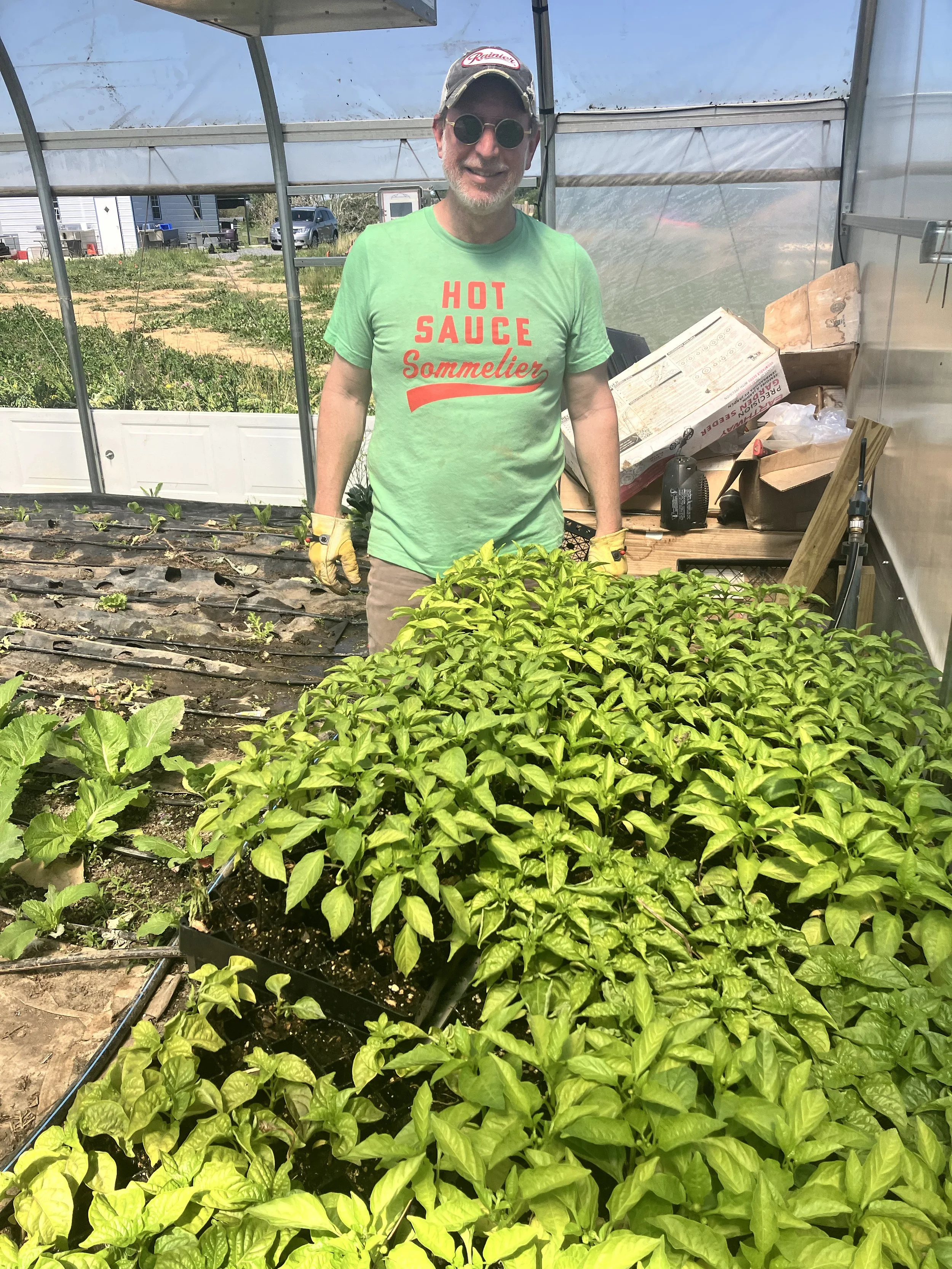
Although professionally trained first as a high school English Teacher and then as an anthropologist evaluating the effectiveness of US foreign aid, Andrew has been involved with food and the food industry ever since he returned from a month-long bike tour in France while in high school in 1983. He has worked in numerous commercial kitchens since then from a small, locally owned bistro in Iowa City, Iowa to the corporate machinery of a TGI Fridays in Rockville, Maryland. While Andrew has skills to produce many kinds of food products and dishes, he recently won regional accolades for his rooftop-produced, small-batch hot sauce taking first place in the 2025 Washington DC State Fair hot sauce contest with his Park View Sky Farm City-State Hot Sauce.
Andrew comes from a musical family, mostly on his mother’s side. Only one member has dabbled in commercial success, however, which was his maternal grandmother’s brother, Yanchi. Yanchi was a cantor in eastern Hungary (now part of western Ukraine) before immigrating to the US via the Bergen-Belson forced labor camp where he served as Choir Director, sparing his life. Yanchi recorded an album of Jewish religious music after settling in the mid-west United States. Andrew’s maternal grandparents were avid classical music and opera fans. His mother Janet, who had season tickets to the National Symphony Orchestra and the National Ballet, played violin and quizzed Andrew when he was young on the instrumentation and era of orchestra and chamber music she was playing on her car’s eight-track cassette deck. Some of the earliest live music Andrew experienced with his parents included Elvis, Peter, Paul, and Mary, and Pete Seeger and Arlo Guthrie. He saw Steven Wade’s original Banjo Dancing live performance at the Arena Stage in DC in 1981. In fourth grade, after obsessing over the piccolo part in Tchaikovsky’s 1812 Overture, Andrew took up flute and played for a few years. Andrew’s popular music tastes post primary school went deep into progressive rock (The Who, Frank Zappa, King Crimson), post-punk (Talking Heads, The Clash), and hard-core punk (Bad Brains, Fugazi). In his junior year of high school, Andrew discovered two bands that would shape his musical trajectory forever; the bluegrass band, the Seldom Scene, and the Grateful Dead.
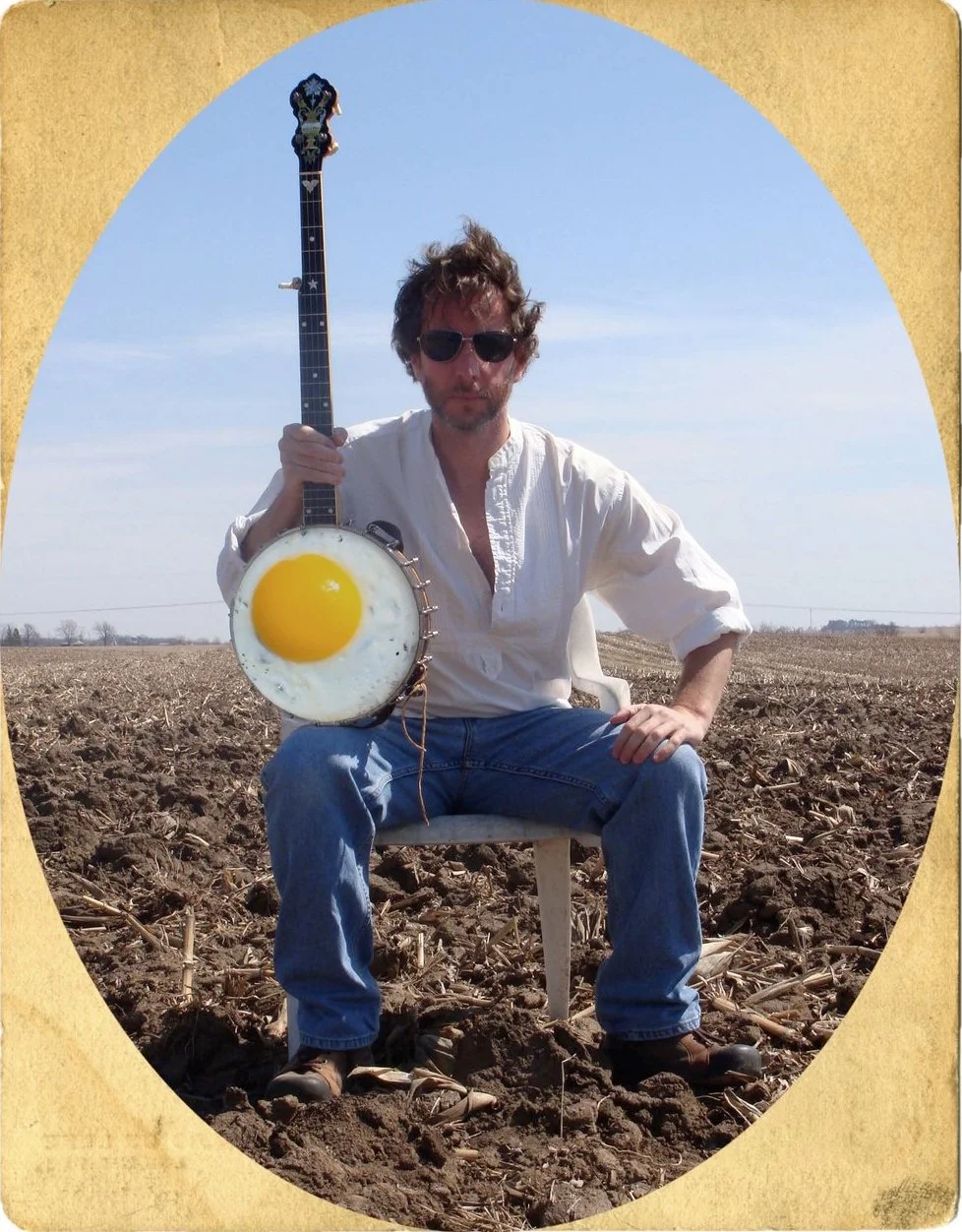
Andrew would go see the Seldom Scene on a few of the famed Thursday nights at The Cellar Door in Georgetown. His first live Grateful Dead show was in March of 1985 at the Hampton Coliseum in Hampton VA, and he would go on to see roughly 20 or so more shows until Jerry’s death in 1995. Inspired by the banjo playing of both Ben Eldrige and Jerry Garcia, Andrew took up Earl Scrugg’s-style bluegrass banjo, mostly teaching himself from books, videos, and recordings. Although Andrew had experienced old time banjo styles as a child through Stephen Wade, the sub-genre would not come into his musical focus until college in upstate New York in 1986. There he discovered the music of the Highwoods Stringband and Walt Koken, and The Thompkins County Horseflies. Andrew played in a few bands through college, primarily bluegrass and folk focused, the most notable of which was the Ontario County Chicken Giblets.
Andrew moved to Seattle in early 1991. There he would study clawhammer banjo with Genie Murphy and other local banjo players such as Jerry Galaher, Molly Tennenbaum, and Dave Leddell, and attend his first old time jams at the New Melody Tavern in the Ballard neighborhood, now called the Tractor Tavern. The 1994 Festival of American Fiddle Tunes was the first old time music festival he would attend, which helped to solidify Andrew’s love of and commitment to the genre. During this time, Andrew also studied the recordings of banjo players Ritchie Stearns (who Andrew met while in college in upstate New York), Bob Carlin, Danny Barnes, Sidna Meyers, Franklin George, and Mike Seeger. Andrew moved to Iowa City in 1996 and discovered a rich music culture for such a small midwest town. He would have the pleasure of learning from and playing with fiddlers Guy Drollinger, Al Murphy, Norbert Sarsfield, and Marc Janssen. In 2005, Andrew joined Norbert’s band, The Gilded Bats, and in 2007, they recorded a self-titled album of primarily West Virginia fiddle tunes and songs. You can listen to the Gilded Bats here.
Andrew’s professional journey through Sudan, Kenya, and South Sudan with a banjo would also prove to be a formative year in Andrew’s musical journey, though not in the way one might think. For the most part, Andrew worked in extremely poor and conflict-affected communities, and so many local cultural and social practices, including making music, had been largely overwhelmed when Andrew worked there. There were few opportunities to exchange music, and so while there are no overt attributes of Andrew’s banjo playing style or repertoire that was influenced by East African music, the banjo was an essential tool in meeting people as well as in nursing long periods of loneliness living in the Southern Sudanese bush. In fact, and perhaps ironically given its African roots, the banjo created a certain degree of interest among the Sudanese and South Sudanese akin to an alien arrival. Here’s are some excerpts from Andrew’s essay, “Dispatches from Khartoum: Lollipop Diplomacy and the Muddy Banjo Blues,” from the Winter 2017/2018 edition of the Iowa Review:
——————————
“I brought a bag of lollipops and a banjo to Sudan.
Needless to say, at the airport in Khartoum on a very hot evening in January of 2009, they invited the suspicious curiosity of the military police battalion, dressed in their baby-blue jumpsuits that were just a bit too 1970s, a bit too tight in the crotch. I winced as an officer strode over with his wedgie. What is THIS? he asked, presenting me with the neck of the banjo.
I had detached the neck from the pot, the drum-like part, so that it all fit into my duffel bag. I planned to put it back together and restring it once I was settled in my room, a small but comfy suite in the nicer part of town with a sunset patio, hot plate, and screaming window air conditioner that kept ejecting its cover in the middle of the night. This was the start of the "year of abandonment" as my children came to call it. Sudan was the first leg: a six-week consulting gig for a large international nongovernmental organization that would take me to Darfur, Nuba Mountains, Blue Nile State, and a few internally displaced persons camps near Khartoum to evaluate an education reform project. Then, I would head to South Sudan for another nine months, where I would resume my ethnographic research on schooling and war for my PhD.
Mixing a little Arabic with some English and wildly over-acted pantomimes, I tried to explain the banjo. Baby-blue jumpsuit man raised the banjo neck in the air toward his battalion comrades as a few perked up from their newspapers and cigarettes. As I pulled the pot out from the bag, he grabbed it suddenly, lifted both banjo parts above his head, and waved them around as if he was signaling in semaphore that sharks lay just beyond the waves. Banjos do that to people.
We stood at a long, stainless steel table just beyond the immigration desk as more parts of the banjo were extracted from my bag… A small army of baby-blue jumpsuits examined the banjo parts including the variety of screws, nuts, and strings. They meticulously laid them out on the table like one might do for dinosaur bones, ordering the parts to reveal the skeleton of the newly discovered banjosaurus. Occasionally, I’d reach over to show them where a part went but then was shooed away for safety reasons. The whole time, [one of the jumpsuits] stared at my face. Eventually, I stared back at him and was like, What? He turned and poked a jumpsuit next to him and pointed up at my face. He said something in Arabic, but I distinctly recognized two words: Chuck and Norris.
He caught the attention of a few more security guys and said Chuck Norris Chuck Norris! whereupon a crowd of baby blue surrounded me, laughing and pointing Chuck Norris! Chuck Norris! It was not the first time this happened to me: I was in Kenya a year earlier and almost daily was pointed at and accused of being Chuck Norris. With my wavy, dirty-blond hair and beard, white guy, sick-ninja moves, it makes sense. Luckily, they love Chuck Norris in Sudan too.
The gaggling, however, became an abrupt silence after a loud bark pierced the hall. Towering above the table was an extremely tall and heavily decorated soldier, golden aiguillette adorning his shoulder, a block of ribbons obscuring his breast pocket, and a scowl hanging below a shiny peaked cap. He held up his palms in a why-am-I-here gesture. A jumpsuit scurried over and pointed at the bones of the banjosaurus. They exchanged some words in Arabic, and then the soldier turned to me. This is a guitar, he said. I stared at him and then at the banjo and then back at him, not sure if this was a question. So I said, Yes, it's like a guitar.
[The guard] slowly moseyed up to the officer and, his head only reaching the officer's shoulder, loudly whispered to the aiguillette. I heard the two words. The officer looked down at the Guard and then at me, whereupon his scowl turned into a yawning smile. He took off his hat and in a deep baritone declared, Chuck Norris! That was the extent of my interrogation and, frankly, over-invasive banjo pat down, and I was waved through, barely able to stuff all my underwear and offending implements of musical destruction back into the duffel, and emerged into a hot, dry sun setting over an empty parking lot…
…For a couple weeks, I was playing the banjo alone in my room, imagining that others staying in the guesthouse might float in on the sweet melodies, inquiring about the exotic sound wafting through their suites. I even played in modal tunings, so it might resemble some of the local, drone-like Sufi chanting. But no audiences wafted in on their own. So, with a little bit of courage mustered after a long day of interviewing teachers about how much it sucks to be a teacher here, I grabbed the banjo and headed downstairs out into the open-air foyer of my building. Leaning back on a metal chair was Yusuf, our security guy, smoking his Benson & Hedges Specials and listening to an ancient radio forever stuck on a station that seemed to do nothing but proffer emphatic lectures of screeching static.
Yusuf is in his early forties and can project a deep raspy voice and a wide, if a bit droopy, frame. But when he knows you, his face flattens into an endearing smile, and out comes a high-pitched and gentle voice that exudes politeness. Starry-eyed and excited for my first concert in Sudan, I pranced up next to him and said, Asalaam aleykum, Yusuf! He turned and, seeing the banjo in my hand, jerked forward like a hiccup, the chair lagging behind his forward momentum as he fumbled with his radio. When the front legs of his chair finally touched down with a clank, he asked, What is this?
I tried to explain the banjo again and asked if I might play something for him. He made a nervous smile and nodded slowly. So I played an enthusiastic version of "Shady Grove," a somewhat well-known American folk song, one of the modal ones I mentioned. When I stopped, he was not smiling. But his eyebrows had stretched across the entirety of his forehead, transforming his flattened features into a windswept smirk. I shoved the banjo toward him, offering him to hold it, and he took it hesitantly. In his hands, he forced a laugh and held it like a diaper full of baby poop. He plucked it once, then shoved it back, so I offered to play again. At this moment, there seemed to be something lost in translation, and so thinking it polite and clever, I asked pointing, banjo or radio?
He chuckled for a second whereupon he emphatically said, Radio!
I was crestfallen. But I tried not to show it. As I thanked him, he turned the radio back on, and a blast of piercing static serenaded my exit from the stage. I thought maybe, just maybe, I could end wars, bring peace and brotherhood to the land from whence the banjo came, or at least bring a smile to a few people living in some of the shittiest conditions on Earth, with a little bit o' clawhammer. This was going to be harder than I thought…
…Standing in line at the airport in Khartoum, a ticket to Mombasa in hand, I held the banjo. I did not have time to disassemble it, so I held it in my hand as I slowly progressed toward security. I was nervous, but mostly about having to explain the banjo again or emphatically deny that I was Chuck Norris. A pair of police wandered up to me. Oh, here it goes, I thought. They pointed at the banjo, and it appeared that one was explaining to the other. This is a banjo, the explaining policeman said to me. Smiling, I looked at the police and then the banjo and then back at the police, wondering if this was a question, so I said, Yes, this is a banjo. Then the policeman said, My cousin plays one in a bluegrass band in Omaha. Do you play it? Yes, I said.
Play! he ordered.
So I put down my luggage and played. The two of them started dancing. Then, a few more joined in, and there were about five heavily armed policemen jumping up and down and waving their arms above their heads as if they were recreating the trance-like Sufi dance of the Whirling Dervishes, wildly bidding us do-gooders adieu. Like I said, banjos do that to people.”
——————————
Andrew returned to Washington DC in 2021, but due to the pandemic, did not meaningfully re-connect to the old time music scene until 2023, when he started attending the Baltimore Old Time Jam led by Ken and Brad Kolodner, and the City-State Jam in Washington DC run by Anna Purrinton and Dave Hauver. Building community with his old time music family has been one of the most important features of Andrew’s post-USAID life, for which he is deeply grateful. Currently, Andrew plays a Pisgah Rambler Custom #2502, a very early Mike Ramsey fretless #46, and Rose, a Bart Reiter Grand Concert #409 named for his grandma who bought it for him as a graduation gift in 1990.